Marijuana Mama Sticker Design
A Designer’s First Look: Bold, Playful, and Unapologetically Graphic
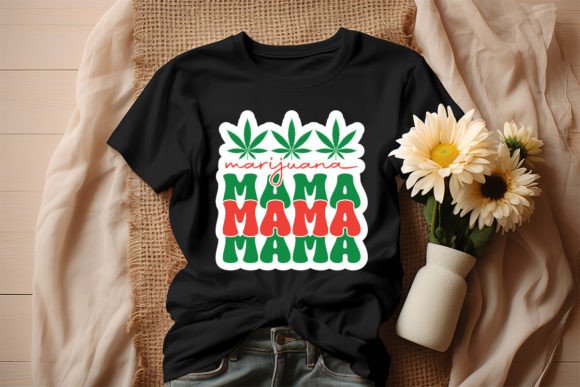
When I opened the Marijuana Mama Sticker Design, my first thought wasn’t “Will this stitch?”—it was “Who will love this *as it is*?” The design lands with confident simplicity: a stylized cannabis leaf cradled inside a retro-diner-style speech bubble that reads “Mama.” It’s not botanical. Not political. Not subtle. It’s cheeky, warm, and instantly recognizable—like something you’d pin to your apron or embroider on a tote for Saturday farmers’ market runs. As an embroidery designer who tests hundreds of graphics yearly, I appreciate how clearly its visual hierarchy works: bold outline, generous negative space, and minimal internal detail. That’s good news for stitchability—but only if you match the right project to its personality.
Where It Shines: Real Projects That Feel Like a Natural Fit
I tested the Marijuana Mama Sticker Design as part of a small-batch embroidered tote bag collection for a local herb shop—and it landed perfectly. On medium-weight canvas with a light tear-away stabilizer, the clean lines translated crisply in satin stitch for the outer shape and soft fill stitch for the leaf interior. No puckering. No thread breaks. Because the design avoids fine linework or tiny serif fonts, it held up beautifully at 4.5 inches wide—the sweet spot for tote side panels and apron pockets.
It also worked surprisingly well on a relaxed-fit crewneck sweatshirt (cotton/poly blend), especially when stitched in muted sage green thread against charcoal fabric. The contrast felt intentional, not loud. For baby items? I’d skip it—though some Etsy sellers do use softened versions for mom-and-me matching sets, the theme leans adult-casual rather than nursery-soft. Where it truly earns its keep is in boutique merchandise: embroidered tea towels for a wellness café, pillow covers for a CBD studio’s waiting room, or custom patches for a female-led herbalist collective. It reads handmade without trying too hard—and that builds trust with customers who value authenticity over polish.
Where to Pause: Fabric, Scale, and Context Matter
This isn’t a one-size-fits-all embroidery file. Its strength—strong silhouette, high-contrast layout—also means it can overwhelm delicate applications. I tried stitching it at 2.2 inches on a lightweight linen baby onesie. Even with ultra-soft cutaway stabilizer, the dense fill area pulled slightly at the neckline seam. Lesson learned: Marijuana Mama Sticker Design needs breathing room. Avoid it on curved surfaces like baseball caps unless you’re using a low-profile cap frame and reducing density by 15–20%. Also steer clear of stretchy knits (think ribbed tees or leggings) without proper backing—or better yet, opt for heat-transfer vinyl instead of machine embroidery for those fabrics.
Dark fabrics demand attention too. The included PNG files are transparent and print-ready, but when converting to an embroidery file, ensure your digitizer preserves edge clarity. On black fabric, white or cream thread looks clean—but avoid pale yellow or off-white unless you’ve tested wash durability. And while the EPS and SVG files are fully editable, remember: editing doesn’t automatically optimize for stitch logic. If you resize beyond 15–18 inches (as noted in the bundle specs), recheck satin stitch width and underlay—especially around the bubble’s rounded corners.
Practical Notes Every Embroidery Designer Should Run Through
- Test first on scrap fabric matching your final product’s weight and weave—even if it’s just a 3-inch square.
- Check thread color contrast in natural light *and* under store lighting. What reads warm olive on screen may look muddy after stitching.
- Review stitch density before sending to machine. Overly dense fills increase wear on thin fabrics and raise production time.
- Confirm hoop size compatibility. At standard sizes (4.5–5.5"), this design fits comfortably—but verify your frame clearance if using multi-needle or cap hoops.
- Inspect small details like the leaf vein lines. They’re minimal, but still need at least 0.8mm stitch width to avoid disappearing in fill.
- Mock it up in black and white—not just color—to assess balance and legibility at smaller scales.
- Use appropriate stabilizer: light cutaway for stable wovens, tear-away for midweight knits, and fusible + cutaway for textured or loosely woven fabrics like toweling.
- Verify licensing before selling finished embroidered goods or reselling digital files. This bundle markets itself for commercial use, but always double-check terms tied to your sales channel (e.g., Etsy’s policies differ from wholesale agreements).
Why It Works for Craft Businesses—Beyond Just Aesthetics
As a designer who helps Etsy sellers refine their listings, I see how the Marijuana Mama Sticker Design supports real business goals. Its graphic nature makes it ideal for printable mockups—no need for complex shadows or fabric draping to sell the idea. It photographs cleanly on flat-lay shots of mugs, totes, and aprons. Customers recognize the vibe instantly: playful self-expression, grounded in wellness culture—not rebellion, not parody. That nuance matters. When used thoughtfully (say, on a linen kitchen towel paired with hand-lettered “Grow Your Own Joy”), it elevates perceived value without needing premium pricing.
For small shop owners building cohesive branding, this design plays well alongside other botanical or retro-inspired graphics—especially since the bundle includes multiple color variants (3 color, 3 white, 3 black PNGs). That flexibility lets you maintain consistency across products while adapting to seasonal palettes or customer requests. Just remember: its charm lies in its confidence, not its complexity. Don’t over-accessorize it with extra embellishments or dense backgrounds. Let it breathe.
Final Thought: A Solid Graphic—If You Match It Right
The Marijuana Mama Sticker Design isn’t revolutionary—but it’s reliable, expressive, and commercially smart. It belongs in your folder of go-to T-Shirt Designs and Graphics for projects where personality matters more than precision. Use it for custom apparel that tells a story, not just covers a chest. Stitch it where the audience gets the wink—and where the fabric, hoop, and stabilizer all agree. Done well, it won’t just look handmade. It’ll feel like it belongs.