Mother Child Bonding Background
First Impressions: Warm, Quiet, and Purposefully Uncluttered
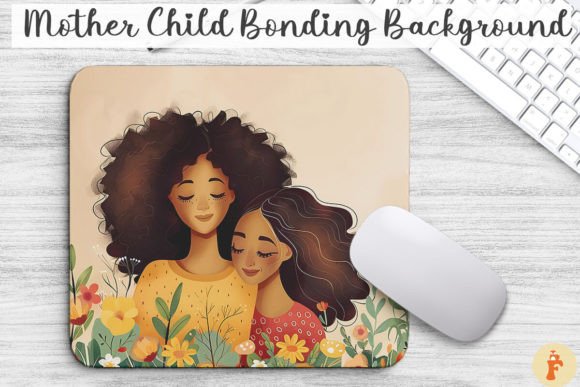
Opening Mother Child Bonding Background feels like stepping into a soft-lit nursery at golden hour—gentle, centered, and emotionally grounded. It’s not a busy scene with props or text; it’s a single, cohesive silhouette of a mother cradling a child, rendered in clean, flowing outlines and subtle internal contours. As an embroidery designer who’s stitched hundreds of sentimental motifs, I immediately notice how the composition avoids visual noise: no intricate lace, no tiny facial features, no overlapping layers that could blur under thread. That simplicity isn’t minimalism for its own sake—it’s *embroiderability* built in.
A Real-World Test: Stitching It on a Linen Tea Towel for a Baby Shower Gift
Last week, I used Mother Child Bonding Background as the focal design for a set of hand-stitched linen tea towels—intended as boutique baby shower gifts for a local craft shop. I chose linen because it’s textured, slightly uneven, and unforgiving of dense or poorly balanced stitch work. The PNG file imported cleanly into my digitizing software, and after converting to a machine embroidery design, I ran a test on scrap fabric first (non-negotiable). What stood out was how gracefully the curves translated: the gentle arc of the mother’s back, the rounded shoulder holding the child, the soft sweep of hair—all held shape without excessive satin stitch runs or jagged fill transitions. On the finished towel, the design read clearly at 4.5" wide—not too small to lose meaning, not so large it overwhelmed the fabric’s natural drape.
Where This Background Truly Shines
- Personalized baby items: Swaddles, onesies, and burp cloths benefit from its quiet tenderness—no risk of looking cutesy or dated.
- Tote bag designs: Centered on natural canvas or unbleached cotton, it reads beautifully at 5–6" wide, especially when paired with a simple monogram or birth date in running stitch below.
- Sweatshirt embroidery: Works well on crewnecks and raglans—its open negative space prevents stiffness, and the moderate stitch density keeps the garment comfortable.
- Embroidered patches: Clean edges and consistent line weight make it ideal for iron-on or sew-on patches on denim jackets or backpacks.
- Nursery decor: When stitched onto pillow covers or framed hoop art, it carries emotional weight without sentimentality overload.
Where to Proceed With Thoughtful Caution
Mother Child Bonding Background isn’t universally flexible—and that’s okay. Its strength lies in intention, not adaptability. Use extra care when applying it to:
- Small hoop sizes (under 4"): The embrace detail softens significantly below 3.75". Tiny hands or overlapping limbs may merge visually.
- Stretchy or thin fabrics (like jersey or voile): Without proper cutaway stabilizer, the gentle curves can pucker—especially along the child’s head contour.
- Dark fabric backgrounds: Since only a PNG is included (no pre-digitized files), confirm your digitizer preserves enough contrast in fill stitch density to prevent “muddying” on navy or charcoal.
- Curved surfaces (caps, curved aprons): The topmost curve of the mother’s head sits close to the edge—test placement carefully to avoid distortion.
- Frequent-wash items (baby bibs, kitchen towels): Verify stitch density supports durability—overly light fill stitches may wear faster than denser satin or tatami fills.
What It Adds to Your Finished Product—Beyond Aesthetics
This isn’t just decoration—it quietly elevates perception. A custom embroidered tote featuring Mother Child Bonding Background feels more considered than one with generic florals. Customers notice the restraint: no clipart energy, no forced whimsy. That translates directly to perceived value, trust, and brand consistency—especially for Etsy sellers or small shop owners building a recognizable handmade aesthetic. For holiday embroidery or wedding gifts (think “new parents” bundles), it signals emotional intelligence in design choice. And because it’s a background-style graphic—not a standalone icon—it pairs effortlessly with names, dates, or short phrases in complementary fonts, making it versatile across product lines without feeling repetitive.
Practical Designer Notes Before You Stitch
- Always test the Mother Child Bonding Background machine embroidery design on scrap fabric matching your final project’s weight and texture.
- Review thread color contrast—especially if stitching on heather gray or oatmeal fabric where light tans or creams may disappear.
- Check stitch density in the embrace area: too sparse, and the maternal connection reads faintly; too dense, and the fabric stiffens unnaturally.
- Confirm hoop size compatibility early—some digitizers default to larger hoops, but this design works beautifully in 4x4 or 5x7 formats.
- Inspect small details in black-and-white mockups—what reads as “soft” on screen may read as “fuzzy” in thread.
- Compare performance on both light and dark fabric previews—PNG transparency means your background color choice impacts clarity.
- Use appropriate stabilizer: medium-weight cutaway for knits, tear-away for stable wovens like linen or quilting cotton.
- Verify licensing before selling finished products or digital embroidery files—this is a Graphics asset, and commercial use terms must be confirmed directly with the seller.
Final Thought: A Design That Supports, Not Competes
In a market flooded with overdesigned, trend-chasing motifs, Mother Child Bonding Background stands out by doing less—and meaning more. It doesn’t shout. It holds space. As a designer, I reach for it when the project calls for sincerity over sparkle, warmth over whimsy, and quiet resonance over instant recognition. Whether you’re stitching a personalized gift, building a cohesive craft business collection, or curating digital embroidery files for Etsy, this background earns its place—not because it’s flashy, but because it stitches true.