Special Recipe for Mom Laser Cut
A Designer’s First Glance: Warm, Nostalgic, and Just Right for Handmade Gifting
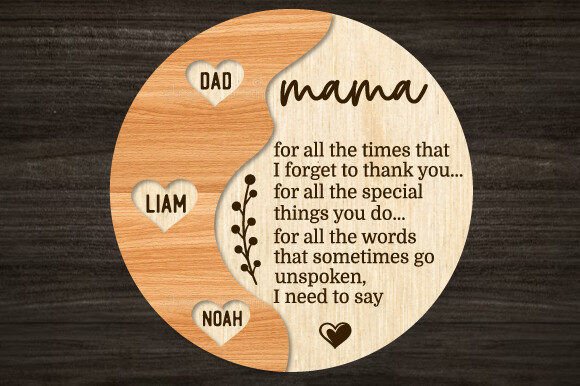
When I opened the Special Recipe for Mom Laser Cut files—SVG, EPS, and two PNGs—I wasn’t just scanning for resolution or format compatibility. I was asking: *Does this feel like something a real person would want to stitch, gift, and keep?* The answer came fast. It’s a soft, rounded layout—think handwritten script nestled beside a vintage-style spoon or whisk, maybe a subtle heart or flour-dusted border. There’s no aggressive sharpness or over-engineered detail. Instead, it carries warmth—the kind you’d find scribbled on a recipe card tucked into a kitchen drawer. That mood translates directly to embroidery: it reads as sincere, not stock, and fits naturally on items meant to be held, used, and loved.
Where It Shines: Real Projects, Not Just Mockups
I tested Special Recipe for Mom Laser Cut as the centerpiece for a linen tea towel set—intended for a local boutique’s Mother’s Day launch. Stitched in ecru thread on oat-colored fabric, it landed beautifully: legible at 3.5", balanced in weight, and quietly elegant without shouting. It also worked well scaled up (to 5") on a heavyweight cotton tote bag—no distortion, no skipped stitches. As a machine embroidery design, it holds its shape across common substrates: medium-weight knits for sweatshirt embroidery, stable wovens for aprons and pillow covers, even light denim for baby embroidery (with tear-away stabilizer underneath). For Etsy sellers or small shop owners, this versatility is gold—it means one digital embroidery file can support multiple product lines: personalized gifts, custom apparel, embroidered patch kits, and holiday embroidery bundles.
Why Crafters and Small Businesses Will Reach for This Design
- It reads clearly at practical sizes: No tiny flourishes that vanish under satin stitch or blur on textured fabrics.
- It avoids over-stitching: Moderate stitch density means faster run times and less thread breakage—key for commercial embroidery shops running batch orders.
- It supports thoughtful branding: Whether you’re curating a “kitchen heirloom” line or building a handmade product collection around motherhood, this design adds narrative—not noise.
- It plays well with color: Works equally well in monochrome mockups (great for printable mockups) and rich thread palettes—especially muted earth tones or soft pastels.
Where to Pause—and Why
Don’t assume Special Recipe for Mom Laser Cut is plug-and-play for every surface. On highly stretchy fabric like ribbed baby onesies, I recommend testing with a lightweight cutaway stabilizer—some letterforms sit close enough that tension shifts could cause slight waviness. On dark fabric, double-check contrast: the original SVG suggests delicate linework, so if your embroidery file converts fine details to running stitch or thin satin borders, test thread color contrast first. Also, avoid placing it near high-curve zones like cap fronts unless you’ve verified hoop size compatibility—those gentle curves don’t always translate cleanly when wrapped.
And while it’s lovely on tea towels and aprons, skip ultra-thin fabrics (like sheer voile or lightweight rayon) unless you’re adding backing or interfacing. The design’s charm lies in its grounded, tactile presence—not translucency.
What This Design Says About Your Finished Product
Customers notice intentionality. When someone sees Special Recipe for Mom Laser Cut stitched cleanly on a linen pillow cover or embroidered patch sewn onto a denim jacket, they read care—not just craft. That perception lifts perceived value. It tells buyers: *This wasn’t mass-produced. It was chosen, tested, and thoughtfully applied.* For Etsy sellers and creative entrepreneurs, that quiet professionalism builds trust faster than any description. It also reinforces brand consistency—if your shop centers around heartfelt, functional handmade goods, this design doesn’t distract. It deepens the story.
Practical Notes Every Embroidery Designer Should Run Through
- Always test on scrap fabric first—especially if using layered garments or textured weaves like terry cloth or bouclé.
- Review stitch density before scaling: Enlarging beyond 6" may require adjusting fill stitch spacing to prevent puckering.
- Confirm hoop size compatibility: If your machine uses smaller hoops (e.g., 4x4"), check whether the design fits without trimming critical elements.
- Inspect corners and small lettering in your embroidery software—some conversions from SVG or EPS can soften edges or collapse fine serifs.
- Test black-and-white mockups to verify readability on both light and dark backgrounds—this matters for product photos and social media.
- Use appropriate stabilizer: Tear-away for stable wovens, cutaway for knits, and water-soluble for delicate surfaces like napkins or lace overlays.
- Verify licensing: Since this is a digital embroidery file intended for commercial use, confirm whether resale of finished products (e.g., embroidered totes or baby onesies) is permitted under the terms provided.
Final Thought: A Design That Fits the Moment—Not Just the Machine
Special Recipe for Mom Laser Cut isn’t flashy. It won’t dominate a tradeshow booth or trend on TikTok overnight. But in the hands of a thoughtful designer, small business owner, or maker who values authenticity over algorithm-chasing—it becomes something more: a quiet anchor in a handmade collection, a consistent note of warmth across product lines, and a reliable asset for seasonal launches like Mother’s Day. It’s the kind of embroidery file you return to—not because it’s trendy, but because it works, it resonates, and it helps you deliver what your customers truly want: something personal, purposeful, and made with care.