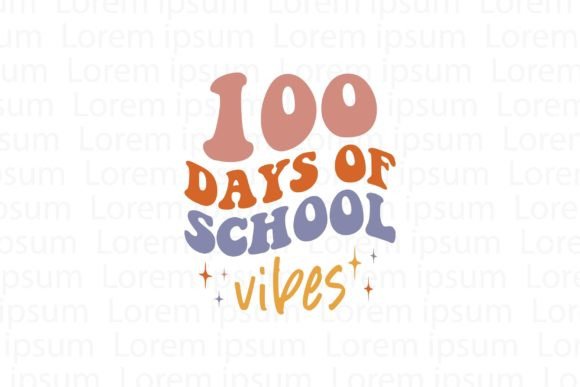
100 Days of School Vibes
A Designer’s First Look: Bright, Nostalgic, and Built for Celebration
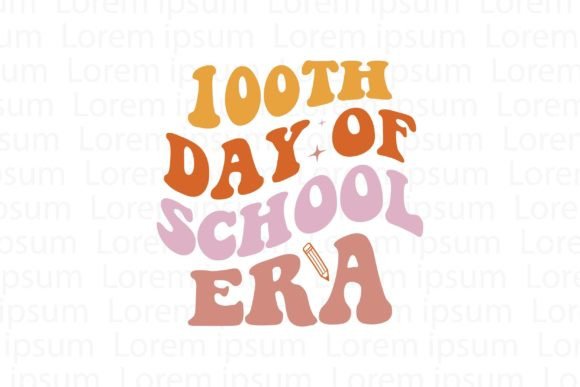
When I opened 100 Days of School Vibes for the first time, I didn’t see just another school-themed graphic—I saw a cheerful, confident moment frozen in design. It’s got that warm, hand-drawn energy you’d expect from a classroom bulletin board, but cleaned up with smart spacing and balanced weight. The layout feels intentional—not too dense, not too sparse—and the lettering has personality without sacrificing legibility. As a designer who regularly translates graphics into machine embroidery designs, my first question is always: Will this hold up when stitched? So I pulled out my hoop, grabbed some cotton twill, and started thinking about where this would live in real life.
Where It Shines: Real Projects That Feel Like Gifts
Last week, I used 100 Days of School Vibes to embroider a set of canvas tote bags for a local preschool’s milestone celebration. We paired it with a simple satin-stitched “100” icon beside the phrase—clean, joyful, and instantly recognizable. Parents loved it. Not because it was flashy, but because it felt personal, handmade, and age-appropriate. That’s the sweet spot: 100 Days of School Vibes works best on items where warmth matters more than precision—sweatshirt embroidery for kindergarteners, baby embroidery on onesies or burp cloths, pillow covers for nursery decor, or even embroidered patches sewn onto backpacks or denim jackets. It also holds up beautifully as a tote bag design or tea towel motif, especially when stitched with soft pastel thread colors against natural linen or light cotton.
Where to Pause: Texture, Scale, and Fabric Reality
This isn’t a design that disappears into the background—it’s meant to be seen. That means it needs thoughtful placement. On textured fabrics like terry cloth or heavy fleece, small details (like fine outlines or tight curves in the letterforms) can blur under dense fill stitch. On stretchy fabric—think ribbed knit tees or baby bodysuits—you’ll want solid stabilizer backing and possibly a lighter stitch density to avoid puckering. And while 100 Days of School Vibes reads clearly on light fabric, its contrast drops noticeably on dark backgrounds unless you adjust thread colors intentionally. I tested it on navy cotton twill using white and pale yellow threads—still readable, but less vibrant than on cream. For caps or curved surfaces, stick to smaller versions; the full-width layout doesn’t wrap well around crowns or brims without distortion.
What You’ll Notice After Stitching
- Visual appeal stays high—the rhythm of the phrase and playful shape give it instant charm, even at medium scale.
- Stitching clarity depends on execution, not the design itself. It’s clean enough to avoid thread nesting, but small interior spaces (like the counter of the “0” or inner loops in “g”) need careful trimming and moderate density.
- Product value lifts naturally—customers associate this kind of joyful, milestone-focused design with care and intention, which supports higher perceived value for handmade products.
- Brand consistency is easy—it pairs seamlessly with other school-year motifs (apples, pencils, chalkboard textures) if you’re building a cohesive line for an Etsy shop or boutique.
Practical Notes Every Embroidery Designer Should Check
Before stitching 100 Days of School Vibes into your next custom apparel or finished product, here’s what I do—and recommend you do too:
- Test the design on scrap fabric matching your final product’s weight and texture.
- Review thread color contrast—especially if planning sublimation or print-then-embroider workflows.
- Check stitch density: too dense = stiff fabric; too light = gaps in coverage. Aim for balanced fill stitch with clean satin borders.
- Confirm hoop size compatibility. This design fits comfortably in a 4x4 hoop at standard scale—but verify before hooping.
- Inspect small details in your embroidery software: corners, joins, and tiny accents should be smooth, not jagged or over-digitized.
- Preview it in black-and-white mockups—this reveals contrast issues faster than color alone.
- Compare performance on light vs. dark fabric backgrounds using printable mockups before committing to production runs.
- Use appropriate stabilizer—cutaway for knits, tear-away for stable wovens, and fusible for lightweight layers like baby clothes.
- Double-check licensing terms before selling finished items or bundling 100 Days of School Vibes as part of digital embroidery file collections.
Who’s This Really For? A Quick Fit Check
If you’re an Etsy seller building a seasonal school collection, this is a reliable anchor piece. If you run a craft business focused on personalized gifts, 100 Days of School Vibes slots neatly into baby embroidery, holiday embroidery (think first-day-of-school photos), or teacher appreciation bundles. Small shop owners love how it scales across product types—tote bag design today, sweatshirt embroidery tomorrow, embroidered patch kits the next week. And for creative entrepreneurs who sell both physical and digital products, it’s a strong candidate for printable mockups or commercial embroidery projects—especially since it comes in AI and EPS formats, making vector edits straightforward.
Final Thought: It’s Not Just a Graphic—It’s a Moment
100 Days of School Vibes isn’t trying to be everything. It’s not ultra-minimalist, nor is it overloaded with clipart clutter. It’s a focused, friendly, school-year celebration—designed to feel earned, not generic. As a T-Shirt Designs asset, it leans into nostalgia without leaning too hard. As a Graphics file, it gives you room to adapt—swap fonts, add icons, layer with applique design elements, or simplify for toddler-sized garments. But its strength lies in staying true to its voice: upbeat, inclusive, and quietly professional. Use it thoughtfully, test it honestly, and let it do what it does best—turn ordinary items into meaningful, handmade products that customers remember.