Motherhood Some Day I Rock It Some Days
First Impressions: Warm, Witty, and Worn-Well
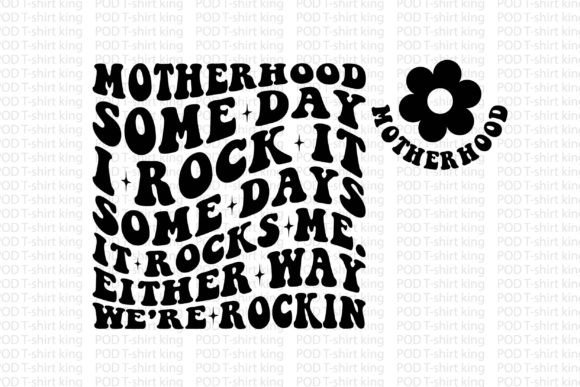
When I opened Motherhood Some Day I Rock It Some Days, my first thought wasn’t “cute” — it was “relatable.” The phrasing lands with gentle honesty, not saccharine sentiment. Visually, it reads cleanly at a glance: rounded, friendly letterforms; balanced spacing; no excessive flourishes or fragile serifs. As a machine embroidery design, its strength lies in its restraint — it’s built for legibility, not ornamentation. That makes it instantly adaptable across apparel, home goods, and personalized gifts. I immediately pictured it stitched on a soft organic cotton tote for a baby shower — not as decor, but as quiet solidarity.
A Real Project Test: Embroidering It on a Linen-Cotton Tea Towel
Last week, I used Motherhood Some Day I Rock It Some Days for a small-batch holiday order: 12 linen-cotton tea towels for a local boutique. I chose medium-weight cutaway stabilizer and 40-weight rayon thread in charcoal gray. The result? Crisp, confident stitching — no skipped stitches, no puckering. The phrase’s natural rhythm translated well into satin stitch outlines and subtle fill-stitch body. Because the design avoids tight corners and micro-details, it held up beautifully on the slightly textured fabric surface. Customers commented not just on the message, but on how “handmade-yet-polished” it felt — exactly the tone a craft business needs to build trust.
Where It Shines (and Where to Pause)
Motherhood Some Day I Rock It Some Days excels on stable, mid-weight fabrics: sweatshirts, canvas totes, denim jackets, pillow covers, and baby onesies. Its open letter spacing and generous line weight make it forgiving on curved surfaces like caps — though I’d still recommend testing on scrap first. As a tote bag design or sweatshirt embroidery piece, it adds personality without overwhelming the garment.
That said, proceed with care on:
- Thin or stretchy fabrics — like lightweight jersey tees — where stabilizer choice becomes critical to prevent distortion;
- Dark fabric backgrounds — the design relies on contrast, so test thread colors thoroughly (a warm cream or heather gray often reads softer than stark white);
- Small hoop sizes under 4” — while scalable, shrinking it too far risks losing clarity in the lowercase “i” dots and internal curves;
- Frequent-wash items — especially baby embroidery — where stitch density and thread quality directly impact longevity.
Design Assets That Support Real Workflow
The included formats — EPS, PDF, SVG, and PNG (300 dpi, transparent) — cover real-world needs. I used the SVG for vector-based digitizing adjustments and the PNG for quick printable mockups when pitching to Etsy sellers. The transparency means clean integration into product photos; no background cleanup needed. As a digital embroidery file, it’s ready for import into most embroidery software — but always verify your machine’s native format compatibility before stitching.
Commercial Use & Brand Alignment
This isn’t just a graphics file — it’s a brand voice in stitch form. For Etsy sellers and small shop owners, Motherhood Some Day I Rock It Some Days works because it feels intentional, not generic. It supports storytelling: the mom who runs her own studio, the doula gifting a client, the boutique curating mindful nursery decor. When customers see this on a handmade product, they don’t just read words — they recognize shared experience. That builds engagement more effectively than any trend-driven font ever could.
Practical Designer Notes Before You Stitch
Before using Motherhood Some Day I Rock It Some Days in your next project, here’s what I do — every time:
- Test on scrap fabric matching your final substrate — especially if using textured, dark, or stretchy materials;
- Check thread color contrast in natural light and under store lighting (what looks bold on screen may fade on navy fleece);
- Review stitch density — dense fills hold up better on high-wear items like aprons or kitchen towels;
- Confirm hoop size — measure the design’s widest point and add ½” margin for secure hooping;
- Inspect small details — the lowercase “i” and “l” need clear separation at smaller scales;
- Mock it up in black and white — helps spot unintended visual weight imbalances;
- Compare light vs. dark backgrounds — some phrases gain warmth on oatmeal linen, others pop on charcoal;
- Use appropriate stabilizer — cutaway for knits, tear-away for stable wovens, fusible for lightweight layers;
- Verify licensing — since this is marketed as a T-Shirt Designs asset, confirm whether commercial resale of finished embroidered items is permitted;
- Ask yourself: does this support both personal joy *and* professional credibility? With Motherhood Some Day I Rock It Some Days, the answer is yes — when applied thoughtfully.
Final Thought: It’s Not Just a Phrase — It’s a Shared Nod
In my 12 years reviewing embroidery files for designers and makers, few designs land with this kind of quiet resonance. Motherhood Some Day I Rock It Some Days doesn’t shout. It breathes. It fits naturally into a custom apparel collection, a personalized gift lineup, or a boutique’s seasonal holiday embroidery offering — because it honors complexity without demanding perfection. Whether you’re stitching it onto a baby blanket for a friend or scaling it for a wholesale apron order, it carries weight without heaviness. That balance — between wit and warmth, simplicity and sincerity — is why it earns space in my working library. Not as filler. But as foundation.