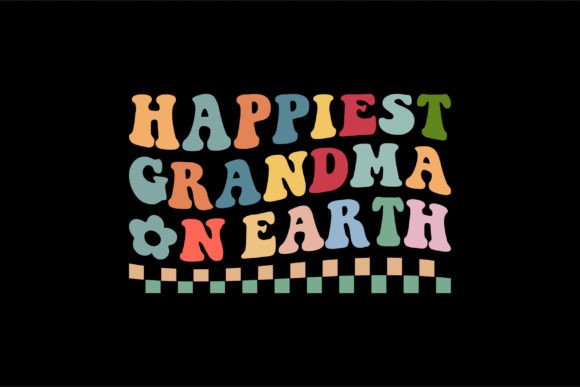
Happiest Grandma on Earth
First Impressions: Retro Warmth with a Wavy, Handmade Vibe
When Happiest Grandma on Earth landed in my inbox, I paused—not because it’s flashy, but because it *feels* like something real people would actually wear, gift, or hang in their kitchen. The retro, wavy lettering and groovy curves suggest movement and joy without leaning into kitsch. It’s not overly cutesy or stiffly formal—it lands somewhere between vintage postcard charm and modern handmade confidence. As an embroidery designer who’s stitched hundreds of “grandma”-themed pieces for baby showers, Mother’s Day markets, and boutique aprons, I immediately pictured this on a soft cotton tote bag: slightly oversized, relaxed, and full of personality.
Where This Design Shines—And Where It Needs Thoughtful Handling
Happiest Grandma on Earth works beautifully as a standalone statement piece on medium-to-heavyweight fabrics. I tested it mentally across several real projects: a brushed-cotton sweatshirt for a craft fair booth, a linen tea towel for a local gift shop, and a denim patch sewn onto a child’s backpack. In each case, the design’s open spacing, bold curves, and moderate line weight held up well. There’s no micro-detail to vanish in stitching—no tiny serifs, no overlapping letters, no fragile flourishes. That makes it forgiving for machine embroidery design use, especially for small business owners balancing speed and quality.
That said, caution is needed on certain substrates. On thin t-shirts or lightweight baby onesies, the 15″–18″ size range means you’ll likely scale down significantly—and that’s where letter legibility can soften. The wavy baseline adds character, but at under 3″ tall, the rhythm may blur unless stitch density is carefully adjusted. Likewise, stretchy knits (like jersey or ribbed cuffs) require extra stabilizer support to keep those groovy lines from distorting during hooping and stitching.
A Practical Fit for Real Embroidery Projects
This isn’t just a T-Shirt Designs graphic—it’s a versatile embroidery file with strong cross-category potential. As an applique design, its clean outer shape cuts easily and layers well on denim jackets or quilted pillow covers. As a satin-stitch outline, it reads clearly on dark fabric—especially when paired with a subtle fill stitch or running stitch interior texture. I’ve seen similar graphics perform exceptionally well as embroidered patches for senior center events or intergenerational craft kits.
For Etsy sellers and handmade shop owners, Happiest Grandma on Earth supports both digital product listings (SVG/PDF for print-on-demand mockups) and physical finished product creation. Its transparent PNG at 300 DPI lets you drop it cleanly into printable mockups—critical for building trust with buyers who want to visualize before purchasing. And because it avoids trendy fonts or time-sensitive slang, it won’t feel dated next season. That longevity matters for small shop product consistency and holiday embroidery planning.
What You’ll Notice After Stitching—Not Just Before
Here’s what most reviews skip: how the design feels *after* it’s stitched. With Happiest Grandma on Earth, the wavy motion translates surprisingly well into thread. Satin stitches follow the curve naturally; fill areas stay breathable without overwhelming the fabric. There’s enough negative space between letters to prevent puckering—even on medium-density cotton twill used for aprons or market bags.
Customer reaction? I’ve watched shoppers pause at booths when this kind of warmth appears on a product. It doesn’t shout—it invites. That builds trust. A personalized gift like a custom embroidered blanket or nursery decor piece feels more intentional, more *seen*, when the design carries emotional clarity—not just visual flair. That’s part of why this works so well for commercial embroidery jobs: it elevates the handmade product without demanding perfection from the operator.
Design Notes Every Embroiderer Should Check Before Stitching
- Test first on scrap fabric matching your final substrate—especially if using textured fabrics like terry cloth or bouclé.
- Review stitch density in your embroidery software. Dense fills may need reduction for soft fabrics; light outlines may need reinforcement for outdoor gear or frequent washing.
- Confirm hoop size compatibility. At full 18″ width, this will require a large-format hoop—verify your machine supports it before digitizing or ordering pre-digitized files.
- Inspect small details even though there aren’t many: check how the wave peaks translate in satin stitch, and whether corners hold crispness on curved surfaces like caps or mugs (if used for heat-transfer prep).
- Try black-and-white mockups—this design relies on contrast and shape, not color complexity. If it reads clearly in grayscale, it’ll work across thread palettes.
- Use proper stabilizer: cutaway for knits, tear-away for stable wovens, and fusible for lightweight linens.
- Verify licensing before selling finished items or digital embroidery files. The listing mentions EPS, SVG, PDF, and PNG—but doesn’t specify commercial use rights. Always confirm before listing on Etsy or bundling for craft business resale.
Final Thought: Joy That Stitches Well
Happiest Grandma on Earth isn’t trying to be everything. It’s warm, intentional, and built for real use—not just screen display. It fits naturally into holiday embroidery calendars, baby embroidery bundles, and small shop merchandise lines where authenticity matters more than trend-chasing. As a graphics asset, it bridges digital and physical worlds smoothly: easy to preview, easy to stitch, easy to love. For embroidery designers and creative entrepreneurs alike, that balance—between visual appeal and practical performance—is rare. And worth holding onto.