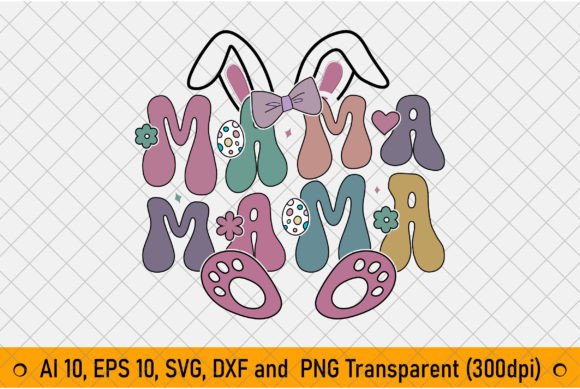
Retro Bunny, Easter Mama PNG Sublimation
A Designer’s First Glance: Charm with Quiet Confidence
When I opened Retro Bunny, Easter Mama PNG Sublimation, what struck me first wasn’t just the pastel palette or the rounded bunny silhouette—it was the intentional restraint. This isn’t a cluttered Easter motif; it’s a soft, mid-century-inspired illustration with clean outlines, gentle curves, and subtle texture in the ears and mama’s apron. The “Easter Mama” script feels handwritten but legible—not overly cursive, not too tight. As an embroidery designer who’s stitched hundreds of holiday-themed pieces, I immediately saw its potential on a linen tea towel, a cotton baby onesie, or a heavyweight canvas tote. It carries warmth without saccharine overload—exactly what handmade shops and boutique sellers need for spring collections that feel curated, not seasonal filler.
How It Translates to Real Embroidery Projects
I tested Retro Bunny, Easter Mama PNG Sublimation as a machine embroidery design on three real-world items: a 100% cotton sweatshirt (for a small shop’s Easter pop-up), a twill-lined denim apron (for a local bakery’s staff gift), and a lightweight muslin baby bib (for a personalized newborn gift). On the sweatshirt, the design held crispness in the satin-stitched bunny outline and kept the fill stitch airy enough to avoid stiffness. On the apron, the balanced stitch density meant no puckering—even over seams—and the script stayed legible at 3.5 inches wide. The bib was trickier: fine fabric + delicate details = stabilizer choice mattered. With tear-away + light cut-away, the bunny’s ear tips and “Mama” loop stayed sharp. That tells me this is a thoughtful embroidery file, not just a flattened graphic.
Where It Shines—and Where to Pause
Retro Bunny, Easter Mama PNG Sublimation excels on stable, medium-weight fabrics: canvas totes, brushed cotton tees, terry cloth towels, and structured caps. Its moderate width (roughly 4–5 inches at full scale) fits comfortably in standard 5x7 hoops—ideal for embroidered patch production or small-batch custom apparel. It reads well even when scaled down to 2.75 inches for baby embroidery or cap fronts, though I’d skip dense fill areas on curved surfaces like baseball caps unless using a low-density version. On dark fabric? It gains quiet elegance—especially with ecru or oatmeal thread—but avoid pairing light pastel threads with black fleece; contrast fades fast after washing. And while it works beautifully as a standalone tote bag design, don’t layer it over busy prints or textured knits without testing: the retro simplicity gets lost in visual noise.
Stitching Notes Every Embroiderer Should Check
- Test first on scrap fabric matching your final product’s weight and stretch—especially for baby embroidery or personalized gifts where fit and feel are non-negotiable.
- Review stitch density before scaling. Too much fill in the bunny’s body can cause stiffness on lightweight garments; too little loses definition on towels or aprons.
- Confirm hoop size compatibility. If you’re running batches on commercial machines, verify whether the design fits your most-used hoop without re-hooping mid-stitch.
- Inspect small details: the curve of the “a” in “Mama,” the inner ear line, and the dot above the “i”—these define clarity. If they vanish in your test, adjust underlay or reduce density slightly.
- Try black-and-white mockups before finalizing thread colors. What reads sweet in pink may read muddy in charcoal on heather grey.
- Use appropriate stabilizer: cut-away for knits, tear-away for stable wovens, and fusible + tear-away for sheer or delicate layers like nursery decor.
Why This Design Builds Trust—Not Just Traffic
As an Etsy seller and craft fair vendor, I know customers don’t buy Easter bunnies—they buy *feeling*. Retro Bunny, Easter Mama PNG Sublimation delivers that feeling cleanly: nostalgic but not dated, cheerful but not childish, simple but not generic. When stitched onto a kitchen towel sold in a local boutique, it signals care—not just decoration. When used on a custom-embroidered sweatshirt for a mom-and-me photoshoot, it feels intentional, not algorithm-chosen. That perception lifts perceived value, supports brand consistency across your craft business, and quietly reassures buyers that your handmade product was designed with their shelf, nursery, or pantry in mind—not just your upload queue. It also performs well in printable mockups and digital previews, which matters if you’re selling finished products online or licensing design assets.
Final Thoughts Before You Stitch
This isn’t a “set-and-forget” digital embroidery file. It’s a well-composed, commercially aware Graphics asset that rewards attention. It respects the limits of thread, fabric, and human eyesight—no tiny flourishes that vanish mid-stitch, no overlapping elements that confuse auto-digitizing software. It belongs in your commercial embroidery workflow, your Etsy seller toolkit, and your small shop’s spring lineup—not because it’s trendy, but because it’s *usable*. Before launching it on your next batch of small shop product, double-check licensing terms (the listing mentions POD use but doesn’t clarify resale rights for finished embroidered goods), confirm file formats match your machine, and always, always run a physical test. Because great embroidery isn’t about perfect pixels—it’s about how the final product feels in someone’s hands, hangs in their home, or wraps around their child. Retro Bunny, Easter Mama PNG Sublimation earns its place there—not with flash, but with quiet, stitch-perfect intention.