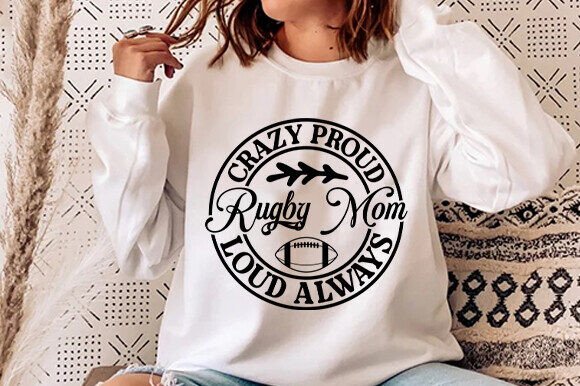
Rugby Mom SVG, Sports Mom SVG, Rugby Mom
First Impressions: Warm, Bold, and Instantly Recognizable
Opening the Rugby Mom SVG, Sports Mom Svg, Rugby Mom file feels like flipping through a well-curated sketchbook—clean lines, confident spacing, and a friendly, spirited energy. It’s not overly ornate or fussy; instead, it leans into bold lettering with subtle rugby-inspired accents—maybe a stylized ball motif tucked into the “O” or a soft curve echoing a jersey neckline. The design reads clearly at a glance, which is exactly what you want when stitching for real-world use: no squinting, no guessing, no lost detail in the hoop. As a designer who’s stitched hundreds of mom-themed pieces—from baby onesies to boutique aprons—I immediately saw this working on a heavyweight cotton tote bag for a local rugby club’s family day. That’s where its personality shines: approachable pride, not performative perfection.
Where It Stitches Best (and Why)
This Rugby Mom SVG, Sports Mom Svg, Rugby Mom thrives in mid-to-large-scale embroidery projects where legibility and warmth matter more than micro-detail. Think sweatshirt chest placements, pillow covers for nursery shelves, or embroidered patches sewn onto denim jackets. On a 100% cotton tea towel? Crisp and charming. On a structured canvas tote? Confident and cohesive. As a machine embroidery design, it avoids tight satin-stitch borders or dense fill-stitch clusters that trap thread or distort on stretchy fabric—making it forgiving for beginners and reliable for volume production.
It also translates beautifully to digital use beyond stitching: printable mockups for Etsy listings, social media banners for small shop branding, or clean vector-based labels for handmade product packaging. Since it’s categorized under T-Shirt Designs and labeled as Graphics, it’s clearly built for versatility—but its true strength lies in tactile, stitched applications where texture and human touch elevate the message.
Use With Care: Real Fabric & Stitching Considerations
That said, don’t toss this into every project without testing. On thin fabrics like lightweight rayon tees or delicate baby knit, the letterforms may need light backing stabilizer—or better yet, switch to a simplified version if one’s included. Curved surfaces (like cap fronts) require careful hooping and possibly slight repositioning to keep the baseline level. And while the design avoids tiny lettering, those subtle rugby accents? They’ll vanish on dark fabric unless you choose high-contrast thread colors—or add an underlay stitch layer during digitizing (if you’re editing the embroidery file yourself).
Also worth noting: dense areas (like overlapping letters or thick outlines) can create stiffness on soft garments. If you’re planning a personalized gift for a newborn rugby fan’s mom, consider simplifying the fill stitch density or opting for a running-stitch outline version for breathability. Always test the Rugby Mom SVG, Sports Mom Svg, Rugby Mom on scrap fabric first—especially if pairing it with textured weaves like terry cloth or linen blends.
What It Adds to Your Finished Product—Beyond the Stitch
This isn’t just another digital embroidery file. When stitched well, it adds instant storytelling. A customer sees “Rugby Mom” on a custom embroidered tote and thinks: *This was made for someone who shows up—rain or shine, muddy boots and all.* That emotional resonance lifts perceived value, builds trust, and makes your handmade product feel intentional, not generic. For Etsy sellers and craft fair vendors, that nuance separates impulse buys from keepsakes.
It also supports brand consistency across product lines. Pair it with coordinating designs (a mini rugby ball icon, a “Team Mom” variant), and suddenly you’ve got a full collection—not just a single graphic. That’s gold for small shop owners building seasonal bundles or holiday embroidery kits (“Rugby Mom Holiday Edition,” anyone?). And because it avoids dated trends or hyper-specific team logos, it stays commercially viable year after year.
Practical Designer Notes You’ll Actually Use
- Test before you commit: Run a sample on your target fabric + stabilizer combo—especially if using layered garments or curved items like caps.
- Check contrast early: View the design in black-and-white mockups. Does it hold up on navy sweatshirts? Light heather grey? Adjust thread colors accordingly.
- Inspect small details: Zoom in on corners, curves, and accent elements. Do they translate cleanly at your intended size? If not, simplify or adjust stitch types manually.
- Confirm licensing: The listing says “perfect for a multitude of creative projects”—but verify whether commercial use (e.g., selling finished embroidered totes on Etsy) is explicitly allowed before scaling.
- Think beyond the hoop: This works as an applique design too—cut fabric shapes for the letters, then satin-stitch edges. Great for adding dimension to baby embroidery or nursery decor.
Final Thought: A Design That Earns Its Place
Not every embroidery file earns repeat use. This one does. It’s balanced—not too loud, not too quiet; not too simple, not too busy. I recently used the Rugby Mom SVG, Sports Mom Svg, Rugby Mom on a set of matching sweatshirts for three sisters whose kids play on the same youth rugby team. The stitching held up through washes, the sizing scaled beautifully from youth small to adult XL, and the moms kept tagging our shop in photos—not because it was flashy, but because it felt *true*. That’s the mark of strong design assets: they serve the story first, the stitch second. Whether you’re a seasoned apparel decorator or a hobbyist launching your first craft business, this is one machine embroidery design worth keeping in your active folder—not just your archive.